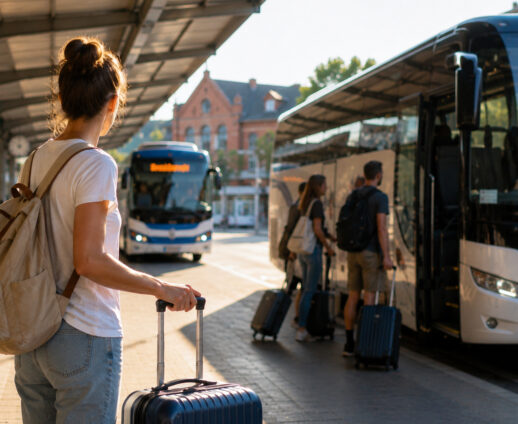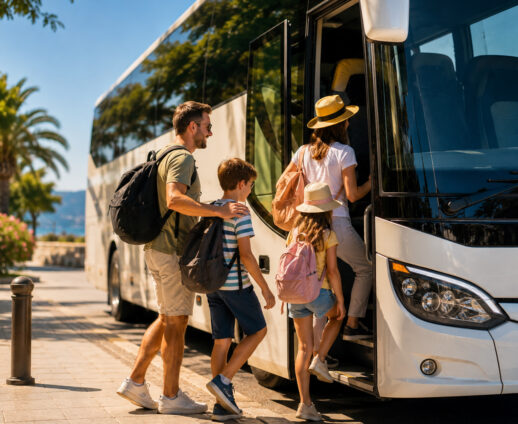


Traveling by coach with children can be comfortable, safe, and much less stressful than many parents assume. Modern coaches offer air conditioning, comfortable seats, luggage space, and the ability to conveniently reach many places in Poland and Europe without having to drive for many hours.
The key to a successful journey is proper preparation. In this guide, you will find practical tips to help you plan a bus trip with a child – from choosing a connection and booking seats to packing luggage and ways to spend time peacefully on the road.
Why choose a bus trip with children?
A coach can be a good means of transport for family holidays, winter breaks, or a short weekend getaway. It avoids the fatigue of driving for hours, parking problems, and some of the costs associated with fuel and road tolls.
- parents can rest during the journey,
- the whole family travels without the need to plan stops and refueling,
- main luggage can be placed in the luggage compartment,
- direct connections reach many popular cities and resorts,
- children can sleep, watch movies, or enjoy pre-prepared activities.
1. Choose the right route and departure time
When planning a trip with children, it is worth paying attention not only to the ticket price but also to the travel time, number of stops, possible transfers, and arrival time. Whenever possible, it is best to choose direct connections.
It is good to adjust the departure time to the child’s daily rhythm. For shorter routes, morning courses are convenient, while for long journeys, a night trip can be a good solution if the child can fall asleep on the bus.
Before purchasing a ticket, also check the scheduled arrival time. Arriving in an unfamiliar city late at night may require advance organization of transport from the station to the accommodation.
2. Check the carrier’s rules regarding children
Before booking, it is worth familiarizing yourself with the regulations of the specific carrier. Rules may vary depending on the company, route, and country.
- check the availability of discounted tickets for children,
- make sure if you need to provide the child’s date of birth during purchase,
- verify the rules for transporting a stroller,
- check carry-on and checked luggage limits,
- read the rules regarding car seats and restraint devices,
- ensure what documents are required during international travel.
Do not assume that the rules will be identical for all carriers. It is safest to check current conditions directly before purchasing a ticket.
3. Book seats in advance
Purchasing tickets early increases the chance of getting seats next to each other. This is especially important when traveling with small children who should sit next to a parent or guardian.
If the carrier allows seat selection, avoid seats that are far apart. It is also worth considering seats away from the toilet and doors, where there may be more passenger movement.
During the summer season, winter breaks, and before long weekends, popular routes can sell out quickly, so it is not worth delaying the reservation until the last minute.
4. Prepare separate carry-on luggage
The most important things should remain in the passenger cabin, not in a suitcase stowed in the luggage compartment. A good solution is to prepare a small backpack for the child and a separate bag for the parent.
- water or another drink in a leak-proof bottle,
- light snacks,
- wet and dry tissues,
- trash bags or bags for soiled clothing,
- a sweatshirt, thin blanket, or extra layer of clothing,
- a favorite plush toy,
- a book, coloring book, or small toy,
- headphones, phone, or tablet,
- charger and power bank,
- regularly taken medications,
- spare underwear and t-shirt for a younger child.
Carry-on luggage should be light and easy to open. Most frequently used items should be placed at the top or in outer pockets.
5. Plan food and drinks
During travel, light products that do not require heating, do not dirty hands, and do not have a strong smell work best.
- sandwiches or small tortillas,
- bananas, apples, or sliced fruit,
- vegetables cut into sticks,
- crackers or rice cakes,
- dried fruit,
- small portions of snacks in sealed boxes.
In the case of small children, avoid products that pose a choking hazard. It is also not worth taking large amounts of sweets, carbonated drinks, and heavy foods that can worsen well-being during the ride.
The child should drink water regularly, but the amount of drinks should be reasonably adjusted to the length of the route and frequency of stops.
6. Prepare entertainment for the journey
Even children who handle travel well may start to get bored after some time. It is best to prepare several different activities and use them gradually.
- coloring books and crayons that do not stain upholstery,
- books and children’s magazines,
- audiobooks and radio plays,
- word games and riddles,
- magnetic travel games,
- a tablet with pre-downloaded cartoons or movies,
- calm music played through headphones.
It is best to download digital materials before departure. Internet coverage during the journey may be unstable, and the Wi-Fi available on the bus is not always sufficient for watching movies.
7. Take care of appropriate clothing
It may be cooler inside the bus than outside due to air conditioning. It is best to dress the child in layers to easily adjust the outfit to the temperature.
Comfortable pants, a soft sweatshirt, and footwear that can be easily removed or loosened will improve comfort during a long journey. For a night trip, a small travel pillow will also come in handy.
8. Prepare the child for stops
On longer routes, carriers usually plan stops during which passengers can use the toilet, buy drinks, and stretch their legs. Their frequency and duration depend on the specific connection.
When getting off the bus, keep younger children close to you and pay attention to vehicle traffic in the parking lot. Before moving away, remember the bus number or marking and the exact departure time provided by the driver.
Do not leave visiting the toilet for the last minute. The stop may be short, and the coach must follow the established schedule.
9. Prepare travel documents for the child
Before leaving, check what documents will be needed on a given route. This applies particularly to international travel.
- ticket or booking confirmation,
- valid identity document of the child,
- passport, when required in the destination country,
- European Health Insurance Card for selected European trips,
- travel insurance policy,
- consents or additional documents when the child is traveling without both parents,
- list of medications taken and key medical information.
Document requirements may depend on the country, the child’s citizenship, and the person they are traveling with. Before departure, verify current regulations and the carrier’s rules.
10. What to do if the child has motion sickness?
If the child does not handle bus rides well, it is worth preparing for such a situation in advance. Before traveling, avoid heavy meals, intense smells, and looking at a screen or book for a long time.
Pack water, tissues, spare clothes, and leak-proof bags in your carry-on luggage. Regarding the use of motion sickness medications, consult a doctor or pharmacist to choose a preparation suitable for the child’s age.
Checklist for a bus trip with a child
| What to pack? | Why is it worth it? |
|---|---|
| Documents and tickets | They are necessary during inspection and border crossing. |
| Water | Helps maintain proper hydration. |
| Light snacks | Help avoid hunger between stops. |
| Sweatshirt or thin blanket | Protect against the cold caused by air conditioning. |
| Tissues and spare clothes | Useful in case of dirt or minor accidents. |
| Headphones | Allow the use of cartoons and audiobooks without disturbing other passengers. |
| Power bank | Allows you to charge your phone or tablet. |
| Favorite plush toy | Can help the child calm down and fall asleep. |
| Medications | Should be in carry-on luggage, not in the luggage hold. |
Frequently asked questions about traveling by bus with children
Does a child need their own bus ticket?
This depends on the carrier’s rules and the child’s age. Some companies offer discounted tickets, but the child may still need a separate reservation and their own seat. Conditions should be checked before purchase.
Can you take a stroller on the bus?
Many carriers allow the transport of a folding stroller in the luggage hold, but additional limits, fees, or the need for prior notification may apply. Details should be checked in the regulations of the selected connection.
Do buses have toilets?
Many long-distance coaches are equipped with a toilet, but this should not be taken as a rule for every vehicle and every trip. Before traveling, check the connection’s equipment and use toilets during stops.
How long can a child travel by bus?
There is no single universal travel length suitable for every child. Their age, previous experiences, time of travel, number of stops, and the possibility of peaceful sleep should be taken into account.
Is a night bus trip with a child a good idea?
A night trip can be convenient if the child can fall asleep in a sitting position and handles the ride well. For very small children or children with motion sickness, a daytime trip may be a better solution.
Summary
A well-planned bus trip with children can be a peaceful start to a family holiday. The most important things are choosing a convenient connection, checking the carrier’s rules, booking seats in advance, and preparing thoughtful carry-on luggage.
Water, light snacks, comfortable clothing, entertainment, and a set of documents help reduce stress during the journey. It is also worth preparing the child for stops, sitting for longer periods, and the rules in place when traveling with other passengers.
Plan your family bus trip
Check available connections, compare destinations, and book bus tickets for the whole family at bilety.pl.