How to get to Croatia by coach in 2026?
Croatia has for years remained one of the favorite holiday destinations for Poles. The picturesque Adriatic coast, hundreds of islands, sunny weather, and rich history mean that every year thousands of tourists choose this country for their summer break. Traveling to Croatia by coach is also becoming increasingly popular, allowing you to comfortably reach the seaside without the need to drive, incur fuel costs, or organize airport transfers. If you are wondering how to get to Croatia, how long the journey takes, and how much coach tickets to Croatia cost, we have prepared a practical guide for the 2026 season.
In the 2026 holiday season, many connections are available for comfortable travel from Poland to the Adriatic. Routes are operated by carriers such as Sindbad and FlixBus, offering departures from the country’s largest cities. A direct bus to Croatia can be found from Warsaw, Kraków, Katowice, Wrocław, Poznań, or Łódź, among others.
The most popular connections are to Dalmatia and the Istrian Peninsula. Depending on the destination, travelers can choose:
- Coach to Split – ideal for those planning a holiday in central Dalmatia and trips to the islands of Brač and Hvar.
- Coach to Zadar – an excellent choice for a short break or a family holiday by the Adriatic.
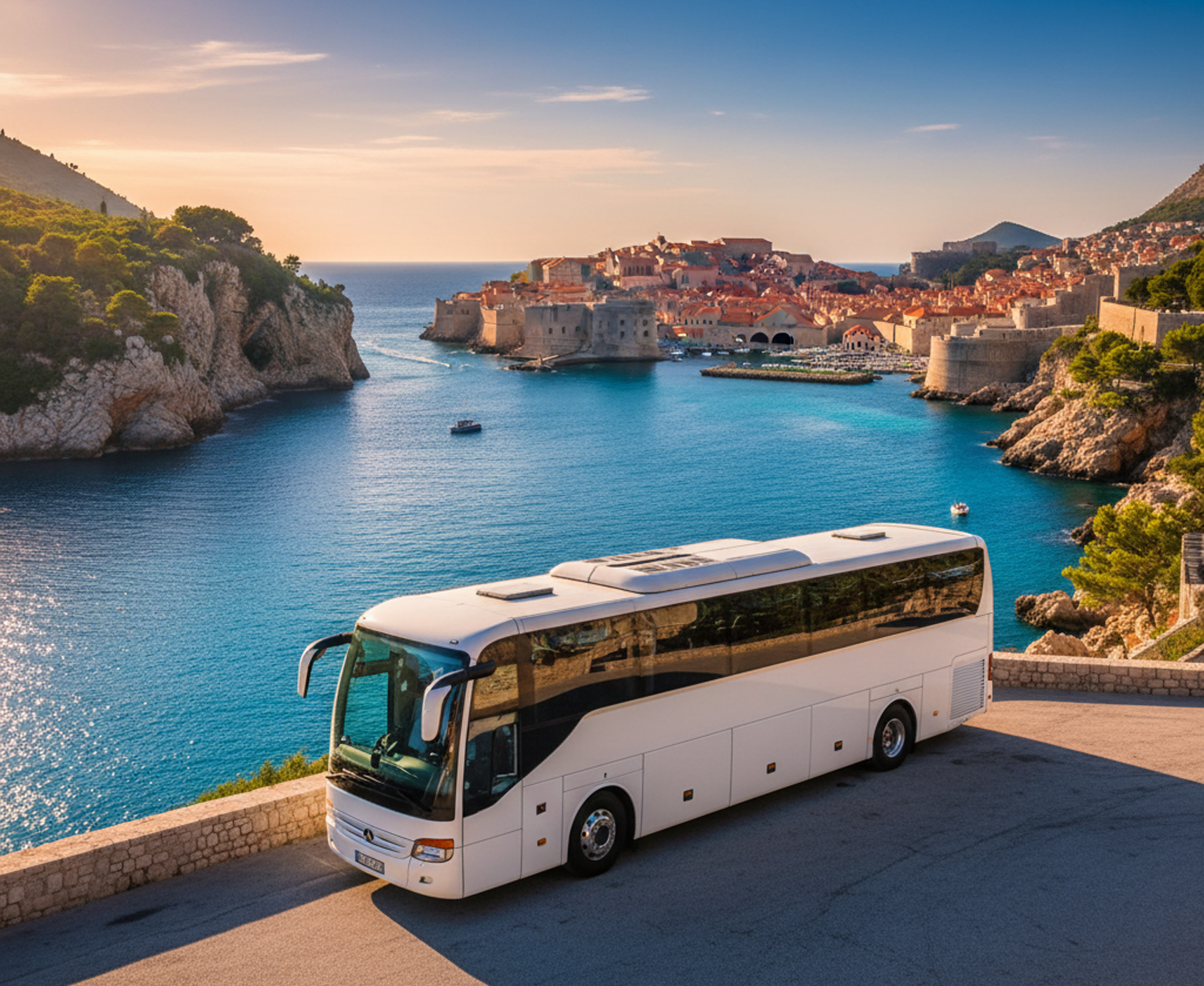
- Coach to Dubrovnik – a route leading to one of the most beautiful cities in Europe.
- Coach to Rijeka – fast access to the Istrian Peninsula.
- Coach to Pula – a convenient option for those wanting to explore the western coast of Croatia.
- Coach to Makarska – a popular holiday destination located at the foot of the Biokovo Mountains.
How long does the journey to Croatia by coach take?
Travel time depends on the city of departure, the number of stops, and the destination town. On average, a journey to Croatia by coach lasts from 14 to 24 hours.
Example travel times:
- Kraków – Rijeka: approximately 14–16 hours.
- Katowice – Zadar: approximately 15–17 hours.
- Warsaw – Split: approximately 20–22 hours.
- Warsaw – Dubrovnik: approximately 22–24 hours.
Many trips are operated at night, allowing passengers to sleep through a significant part of the route and start their holiday immediately upon arrival. Traveling by night coach to Croatia is a good option, especially for people who want to save time and start relaxing from the very first day of their stay.
How much do coach tickets to Croatia cost?
Prices depend on the date of purchase, the season, and the carrier. The best offers are usually available several weeks before departure. In the 2026 season, approximate prices are as follows:
- One-way ticket: from 320 PLN to 550 PLN.
- Return ticket: from 580 PLN to 950 PLN.
- Promotional offers: available with early booking or outside the peak season.
If you are planning a holiday in July or August, it is worth buying coach tickets to Croatia well in advance, as the cheapest seats sell out the fastest. It is also worth regularly checking the bus timetable to Croatia, as the number of connections may be higher during the holiday season than in the off-season.
Most popular Croatian cities you can reach by coach
Thanks to an extensive network of coach connections, you can comfortably reach the most important resorts and cities on the Adriatic. Each of them offers a slightly different atmosphere, attractions, and relaxation opportunities.
Split – the historical heart of Dalmatia
Split is Croatia’s second-largest city and one of the most popular destinations chosen by tourists traveling by coach. The biggest attraction is the UNESCO-listed Diocletian’s Palace, which forms the living heart of the city. Strolling through its streets, you can discover Roman monuments, atmospheric restaurants, local markets, and the Riva seaside promenade.
A coach to Split is a good choice for people who want to combine a seaside holiday with sightseeing. The city is also an excellent base for trips to the islands of Brač, Hvar, and Vis, as well as to Trogir and the Krka National Park.
Zadar – sunsets and the Sea Organ
Zadar delights with its combination of history, seaside atmosphere, and modern attractions. The most famous is the Sea Organ – a unique musical installation that uses the waves of the Adriatic to create sounds. Right next to it is the Greeting to the Sun installation, which creates an impressive light show after dark.
A coach to Zadar will work well for both a short city break and a family holiday. From the city, you can easily plan trips to the Krka National Park, Pag Island, or the vicinity of the Paklenica National Park.
Dubrovnik – the pearl of the Adriatic
Dubrovnik is one of the most beautiful cities in Europe. Historic city walls, stone streets, red roofs, and views of the Adriatic attract tourists from all over the world. A walk along the defensive walls is one of the biggest attractions in all of Croatia, and the Old Town is a UNESCO World Heritage site.
A coach to Dubrovnik is a suggestion for people who want to reach southern Croatia without a car. The city gained additional popularity thanks to the series “Game of Thrones,” but its history, architecture, and seaside location are enough reason to visit it at least once.
Makarska – holidays at the foot of the Biokovo Mountains
Makarska is one of the most famous resorts on the Croatian coast. The city is located between the sea and the Biokovo massif, thanks to which it offers unique landscapes. The popular promenade, beaches, restaurants, and mountain views make Makarska particularly liked by those looking for a classic Adriatic holiday.
A coach to Makarska will be a good choice for people planning a holiday in Dalmatia, especially if they want to combine sunbathing, local gastronomy, and active recreation. In the area, it is worth visiting the Biokovo Nature Park and the Skywalk Biokovo viewpoint.
Rijeka – the gateway to Istria
Rijeka is Croatia’s largest port and an important transport hub in the north of the country. The city has a more local, urban character than typical resorts, but it serves as a great base for exploring the Istrian Peninsula. It is worth seeing the Korzo promenade, Trsat Castle, and the coastal surroundings of Rijeka.
A coach to Rijeka is a practical option for those who want to start a journey around Istria or visit nearby Opatija, Rovinj, Poreč, or the Kvarner islands. For travelers from southern Poland, Rijeka is often one of the fastest reachable destinations in Croatia.
Pula – Roman heritage on the Adriatic
Pula impresses with one of the best-preserved Roman amphitheatres in the world. The Pula Arena is a symbol of the city and still hosts concerts and cultural events today. In addition to Roman monuments, Pula also offers access to beaches, bays, and picturesque towns in Istria.
A coach to Pula is worth choosing if you plan a holiday on the west coast of Croatia. It is a good starting point for exploring Rovinj, the Brijuni National Park, and smaller towns located on the Adriatic.
The most interesting attractions in Croatia
Croatia offers much more than just beaches. It is worth visiting Diocletian’s Palace in Split, the Old Town in Dubrovnik, Plitvice Lakes National Park, Krka National Park, the Sea Organ in Zadar, the Arena in Pula, the UNESCO-listed Trogir, or the famous Zlatni Rat beach on Brač Island. Cruises to the islands of Hvar, Korčula, and Mljet are also popular.
For those traveling by coach, a big advantage is that many of Croatia’s greatest attractions are located near popular cities and bus stations. Thanks to this, after arrival, you can easily continue your journey by local transport, ferry, or organized tour.
Curiosities about Croatia worth knowing before you go
Croatia is not just beautiful beaches and sunny weather. The country hides many fascinating stories and unusual attractions that can surprise even experienced travelers.
- The Sea Organ in Zadar creates music thanks to the waves of the Adriatic and is one of the most original urban installations in Europe.
- According to Alfred Hitchcock, the sunset in Zadar was one of the most beautiful he had ever seen.
- Croatia has over 1,200 islands and islets, only some of which are inhabited.
- Diocletian’s Palace in Split has been continuously inhabited for over 1,700 years.
- Dubrovnik was for centuries an independent state known as the Republic of Ragusa.
- The name “cravat” (tie) originates from Croatian soldiers serving in France.
- Hum in Istria is considered one of the smallest towns in the world.
- Zlatni Rat beach on Brač Island regularly changes its shape under the influence of waves and wind.
- Hvar Island is among the sunniest places in Europe.
- Plitvice Lakes is the oldest and largest national park in Croatia.
- Many scenes of the series “Game of Thrones” were filmed in Dubrovnik.
- The amphitheater in Pula is among the best-preserved Roman amphitheatres in the world.
- Croatia has eight national parks, including Plitvice, Krka, Paklenica, Mljet, and Brijuni.
- One of the most valued cheeses in the region – Paški sir (Pag cheese) – is produced on Pag Island.
- Ston has some of the longest defensive walls in Europe, often called the “European Great Wall.”
- Rovinj is sometimes called the Croatian Venice due to its narrow streets, colorful facades, and seaside location.
- According to local tradition, Marco Polo was born on the island of Korčula.
- A popular custom in Croatia is long coffee on a cafe terrace – it is an important element of the local lifestyle.
Practical tips before the journey
- Baggage: most carriers allow for the transport of main and carry-on luggage included in the ticket price.
- Documents: a valid ID card or passport is sufficient for travel.
- Travel comfort: it is worth taking a travel pillow, headphones, and a power bank.
- Air conditioning: even in summer, a light sweatshirt or jacket will come in handy.
- Booking: purchasing tickets in advance allows you to find the most favorable prices.
- Stops: on international routes, carriers organize regular breaks, so it is worth having some small Euro change for coffee, water, or snacks.
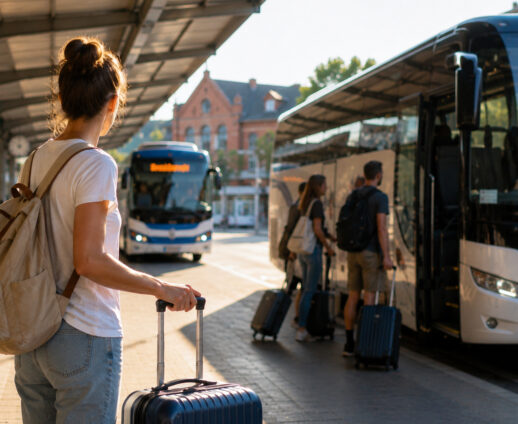
- Arrival at the station: for international travel, it is best to arrive at the departure point earlier to calmly find the platform and prepare documents.
Croatia by coach 2026 is a convenient way to reach the Adriatic without the need to drive a car. Direct connections, competitive prices, and the possibility of reaching the most popular resorts mean that every year more and more travelers choose this form of transport.
Planning a holiday on the Adriatic? Check the current coach connections to Croatia, compare prices, and book coach tickets to Croatia at bilety.pl.