
Long coach trip – practical passenger guide 2026
Are you planning a route across Poland, or maybe heading to Berlin, Paris, or Rome? Modern coaches in 2026 offer a standard close to business class in aviation, but a long route always requires proper preparation. This guide will help you plan your trip so that it is comfortable, cheap, and completely stress-free.
Step by step: How to prepare for the trip
- Buying a ticket and choosing a seat: It is best to buy coach tickets 2-4 weeks in advance – prices on popular international routes start from as low as PLN 120–180, while those bought “at the last minute” can cost over PLN 350. Choose platforms such as bilety.pl, which allow you to compare carriers like Sindbad, FlixBus, or Polonus in one place.
- Booking management: In 2026, most carriers offer so-called open tickets or the possibility of free rescheduling up to 24 hours before departure. Check the customer panel to see if your ticket allows changing passenger details if the need arises.
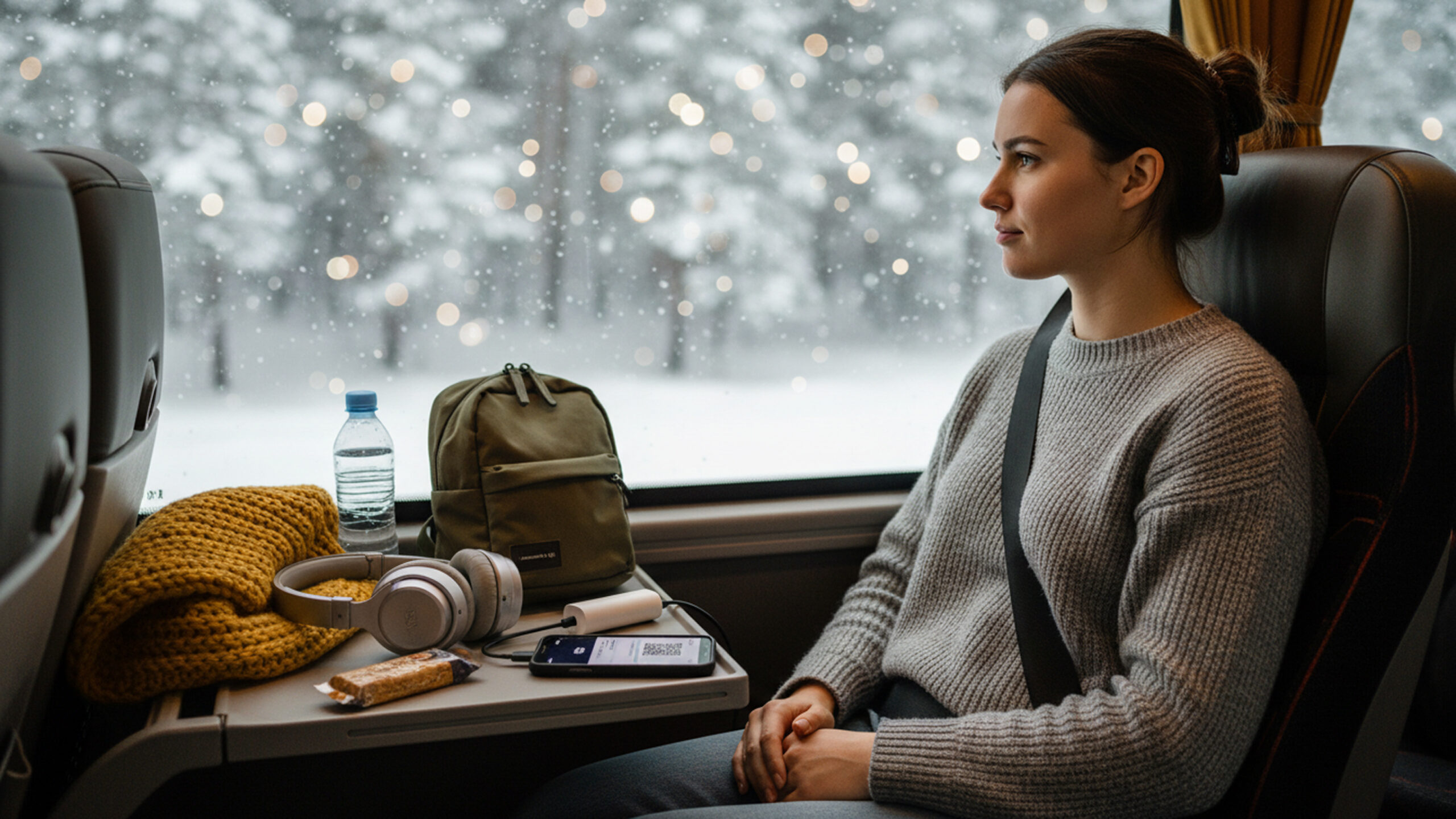
- Packing luggage (80/20 split): Place 80% of your things (clothes, cosmetics) in the main luggage in the hold. The remaining 20% is your onboard essentials: power bank, noise-canceling headphones, water (still), and a light snack (e.g., nuts or energy bars).
- Digital documents: You don’t need to print your ticket. A QR code on your phone is enough. However, remember to bring a physical ID card or passport when crossing borders, even within the Schengen area.
Most common mistakes and how to avoid them
- Being late to the station: This is the most common reason for losing a ticket. Arrive at least 20 minutes before departure. Long-distance coaches at large stations (e.g., Warsaw West or Krakow Main) often depart from different platforms depending on the carrier.
- Too much carry-on luggage: Overhead compartments in coaches are smaller than in airplanes. A large backpack under your feet drastically reduces your travel comfort.
- Lack of preparation for temperature changes: Air conditioning in coaches works intensively. Always have a sweatshirt or a light scarf at hand, even if it’s hot outside.
What to do when something goes wrong?
Despite the best planning, unforeseen situations happen. Here are short instructions:
- Coach delay: Check the connection status in the app or on the carrier’s website. If the delay exceeds 90 minutes, on routes over 250 km you are entitled to meals and drinks (proportionate to the waiting time).
- Stop change: Carriers inform about this via SMS or email. Always check your inbox before leaving home. If the new location is significantly far away, you have the right to cancel and receive a full refund.
- Lost luggage: Every piece of luggage in the hold should be insured. In case of loss, ask the driver for a damage report protocol immediately upon arrival.
Safety during a coach trip – the most important rules
At bilety.pl, we focus on conscious travel: safety is not a one-off “action,” but a set of simple habits that realistically reduce the risk of injuries and unpleasant situations on the route. Below you will find key rules worth remembering from the moment you board the coach until the last stop.
1) Always wear your seat belt – also on the coach
The same basic safety rules apply in a coach as in a car. If your seat is equipped with a belt, treat it as a mandatory part of the journey and keep it fastened throughout the trip. A seat belt helps reduce injuries during sudden braking or a collision – even when the drive seems smooth.
It is worth remembering that in a collision at a speed of just about 20 km/h, the force acting on the body can exceed its weight many times over – a person is unable to “hold on” by themselves. If the belt is too short for you, ask the staff (e.g., the driver) for help – belt extenders are available on many coaches.
2) Reduce the risk of trips and injuries: luggage in the hold, aisle clear
Always place large suitcases and heavy bags in the luggage hold, not in the aisle or in front of the seat. This creates more space in the coach and reduces the risk of objects falling over or hitting someone during the drive. Keep your onboard essentials compact (e.g., a small backpack/bag) so they do not block the aisle.
3) The overhead shelf is for light items, not heavy luggage
You can put outerwear (jacket, sweatshirt, scarf) on the overhead shelf to free up space on the seat and improve travel comfort. However, do not place heavy luggage on the shelf – during sudden braking, it could fall and cause injury to you or other passengers.
4) Hot drinks only with a lid
During the drive, the coach may brake suddenly. If you buy coffee or tea at a stop, choose a cup with a lid. This is a small detail that reduces the risk of spilling hot beverages and causing burns.
5) Avoid walking around the coach while driving
When the coach is in motion, it is best to remain in your seat. Standing up and moving around increases the risk of falling during sudden braking. If you must use the toilet or reach for water, do so carefully and – if possible – during a stop.
6) Be visible after dark: reflector and phone light
Boarding and alighting at intermediate stops, especially outside large stations, can be more difficult after dark. It is worth having a reflector with you – drivers can then see a pedestrian from a much greater distance, giving them more time to react. Additionally, even a small light source (e.g., a phone flashlight or a back-lit reflector) can realistically improve safety.
Practical tip: attach the reflector at a height of about 50–70 cm from the ground (the level of car headlights). A hanging reflector should stick out from under outerwear and move freely. If possible, wear reflectors on both sides of your body to be visible from the left and right.
7) First aid: react quickly and inform the staff
No one is completely immune to a sudden deterioration in well-being or a minor injury. If you feel unwell during the trip, inform the driver – people operating the connections are trained in responding to emergency situations. It is also worth periodically refreshing your own first aid knowledge: a quick and proper reaction can save health, and sometimes even life.
Ready for the trip? Check connections on bilety.pl
Compare carriers, choose the most convenient times, and buy a ticket at the best price – all in one place. Go to bilety.pl, check available national and international routes, and book a seat for your journey now.